
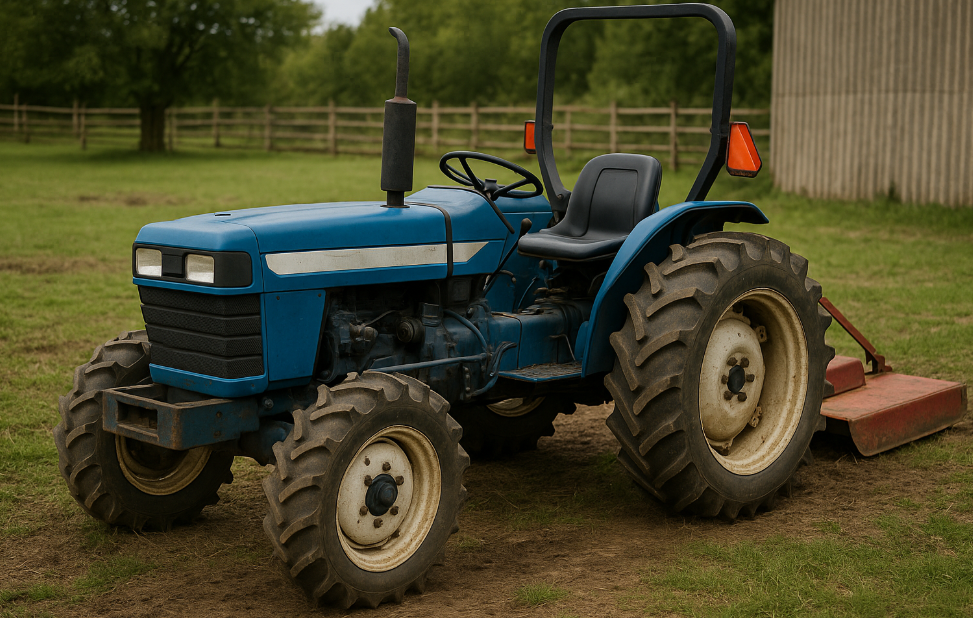
Alpacas are light on the land, but the work that goes into keeping their fields usable is not. The most common reasons alpaca owners invest in a tractor include:
Poo Collection and Management
Every responsible alpaca owner knows that regular poo-picking is critical for parasite control. But manually barrowing out wheel after wheel of nuggets gets old fast. A small tractor with a trailer, or even better, a purpose-built poo sweeper attached to a tractor, makes quick work of an otherwise time-consuming task.
Topping the Fields
Regular topping keeps pastures in good condition, stops the grass from being hard for alpacas to eat, and also helps prevents weeds from seeding. A tractor with a rear-mounted topper can cover your field in a short time where a pedestrian mower or most garden lawn tractors would take hours and wouldn’t get far with tufty grass and bumpy terrain.
Help with Fence Building
If you’ve ever tried to dig a post hole with a manual auger in South East clay, you’ll understand why tractor-mounted augers are worth their weight in gold. A tractor can also move timber, strainers, wire rolls, and tools all in one go.
Hauling Trailers
From hay bales to logs, to water tanks and fence posts, you’ll quickly find yourself needing to tow something heavy. A tractor can pull a trailer loaded with all your essentials across rough ground.
Paddock Maintenance and Landscaping
Need to tow a sprayer, dig a hole, or move hardcore to fix a gateway? Level some ground? Fill a trench? The ability to use attachments or use a front-loader bucket on a tractor will save your back, your wheelbarrow, and your weekend.
What Type of Tractor Is Right for an Alpaca Farm?
Now we come to the tricky bit. The agricultural world is full of shiny, expensive machines, many of which are completely over the top for the average alpaca breeder. Let’s strip it back to what really matters for you.
Size Matters, But Bigger Isn’t Better. Enter Jeremy Clarkson. In a bid to manage his 400-acre farm, he bought a 270hp Lamborghini tractor the size of a small house. It had so many electronics it could’ve flown to the moon, and it didn’t even fit through his farm gates. It was a tractor made for vast arable fields, not for navigating British hedgerows and alpaca paddocks.
For the average UK alpaca farm, let’s say between 5 and 30 acres, a compact to mid-sized tractor is more than sufficient. Think 20 to 60 horsepower, depending on terrain and tasks. If your land is hilly, clay-heavy, or boggy, you might want to edge towards the more powerful machines. But for level ground and modest jobs, even a 25-30 hp machine will do you proud.
Many tractors come in both 2WD and 4WD variants. Go 4WD. Slippery grass, winter mud, and uneven terrain are standard in the South East, and you’ll be thankful for the extra grip.
Tractor Attachments: What You’ll Actually Use
Let’s keep it real. You don’t need a potato planter or a silage wrapper (probably). Here’s what you will use:
- Topper or flail mower: For cutting grass and weeds.
- Post hole auger: For digging holes during fence installation.
- Link box or tipping trailer: For hauling.
- Poo sweeper or collector: For easy poo management.
- Front-loader bucket (optional but brilliant): For moving materials and general jobs.
- Perhaps a small subsoiler to break up the ground, or maybe a sprayer to get rid of weeds.
All these tools attach via the three-point hitch system on the rear of the tractor. It’s a standardised attachment mechanism that allows you to hook up most implements with a bit of practice. Just make sure your tractor and attachment are matched in terms of size and power.
Old Tractors vs New Tractors
There’s a special place in the alpaca community’s heart for older tarctors, like the Massey Ferguson 135. These classic workhorses are simple, tough, and famously reliable. Many have outlived their original owners and are still running strong on farms across the country.
The Case for a Vintage Tractor
- Fewer electronics: Easier to fix.
- Cheaper to buy: Especially second-hand.
- Lighter on fuel: No unnecessary power drain.
- Plenty of spares available: UK is full of MF parts suppliers.
But be realistic. Older tractors require tinkering and most don’t have power steering, roll bars, or comfy seats. You’ll need to maintain them yourself, or know someone who can.
The Case for a Newer Tractor
- Safer: Rollover protection, seatbelts, enclosed cabs.
- More comfortable: Especially for long jobs.
- Easier to operate: With hydrostatic transmissions and intuitive controls.
- Finance options are often available to spread the cost, and you may also be able (depending on your circumstances) to be able to offset the cost using HMRC’s annual investment allowance.
New doesn’t have to mean enormous. Brands like Kubota, Iseki, John Deere (compact range), and New Holland Boomer offer excellent small tractors suitable for alpaca farms.
What About Electric Tractors? Yes, they exist. But we’re in the early days. Brands like Solectrac and Monarch are pioneering battery-powered tractors, but availability in the UK is limited and prices are high. You’re looking at £30,000+ for models that match a 40hp diesel. For now, most alpaca owners stick with traditional fuel.
How Much Will It All Cost?
Here’s a likely ballpark breakdown for a tractor setup:
Item New Used (Good Condition)
- Compact tractor (25-40hp) £11,000 – £22,000
- Topper £800 – £1,200
- Trailer (link box/tipping) £500 – £3,500
- Auger £1,000 – £2,000
- Poo sweeper £1,000 – £3,000
- Front loader £2,000 – £5,000
Ongoing costs:
Fuel: £2-4/hour for diesel.
Maintenance: Annual service £150 – £400 depending on age and complexity.
Insurance: Around £150-£300/year.
Tractors get stolen. Often. Particularly in the South East, where isolated farms make easy targets. Here’s how to protect your investment:
Store indoors: A lockable barn, shed, or secure garage
Fit a tracker: Some insurance policies require one.
Register it with CESAR or similar, an agricultural equipment theft register.
Safety: Don’t Become a Statistic
Tractors might seem slow and safe, but they kill people. Every year. Especially on smallholdings. Here’s what to watch:
- Rollovers: Always buy a tractor with ROPS (Roll Over Protection Structure). Never use on steep slopes without it.
- PTO shafts: Power Take Off shafts can entangle clothing and limbs. Use guards and NEVER lean over a running PTO.
- Kids: Keep them away. Tractors and children don’t mix, even “just for a ride.” There are legal implications here too, make sure you know what they are, in the UK, it is illegal for children under 13 to drive or ride on agricultural machines, including tractors.
- Noise and vibration: Use ear defenders and gloves if you’re on the tractor for long periods.
A well-chosen, well-maintained tractor is a brilliant asset, but only if you respect what it can (and can’t) do.
Final Thoughts
You don’t need a Lamborghini. You don’t need 200 horsepower. And you certainly don’t need to bankrupt yourself chasing features designed for mega-farms. What you do need is a sensible, safe, practical workhorse that can handle the mucky, bumpy, poo-covered reality of alpaca farming.
Pick a tractor that fits your land and your herd size. Learn how to use it properly. Maintain it well. And above all, respect it.
Because once you’ve owned a good tractor, you’ll never go back.
If you’re just starting out, and thinking of getting alpacas? The British Alpaca Society offers free resources and a directory of accredited breeders. Also consider joining the South East Alpaca Group, a volunteer group affiliated with the BAS, who support alpaca and llama enthusiasts across the South East of England.
Message from the South East Alpaca Group committee. We know that no two herds, or herd owners, are the same. We hope you found this article useful and if you’ve got ideas, suggestions, corrections, or just a different way of doing things, we’d love to hear from you. Our goal is to offer the most accurate, practical, and useful advice possible, and that works best when we all pitch in. Drop us a line at committee@southeastalpacagroup.org.uk and help us make our articles better.