
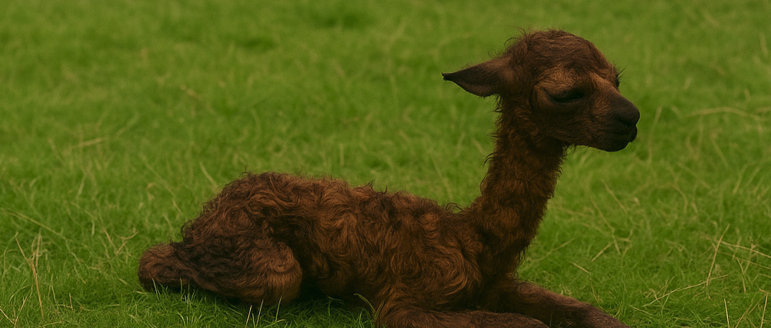
There are few moments more heart-lurching than the discovery of a premature cria. Whether they are alive or still, warm or cold, the sense of urgency, grief, confusion, or all three, can overwhelm even the most experienced owner. This is a guide grounded in science, but also in compassion, for the alpaca, and for you.
A premature cria born alive is a fragile bundle of possibility. Some will be just a few days early and bounce back with a little extra care. Others may arrive weeks too soon, slick-skinned and weak, not yet ready for the world. The first thing you need to do is breathe. Then begin a calm but rapid assessment.
Warmth First, Always
Premature crias often have difficulty thermoregulating. Their fleece may be thin or patchy, and their energy reserves low. Hypothermia can set in quickly and become life-threatening, even on a hot day. Bring the mother and cria inside or to shelter, wrap it in towels, and start using a heat source: a heat lamp, warm bottles wrapped in towels, or even your own body heat if that’s all you’ve got.
Target temperature is around 37.5°C to 38.5°C. If you have a thermometer, use it. If not, go by feel: cold mouth, cold armpits, and cold feet mean you’re losing the battle.
Next support the cria’s neck. A hallmark of prematurity is poor muscle tone, particularly in the neck. These crias may lie limp, unable to lift or hold their head up. Roll up a towel into a horseshoe shape and use it to support their neck and prevent airway obstruction while they lie on their side.
Feed Gently, Feed Carefully. Premature crias often cannot stand or nurse on their own. If the dam allows, you may try expressing colostrum and offering it via bottle. If not, a powdered camelid or goat colostrum substitute can be used. The first 6–12 hours are critical for passive transfer of immunity.
Never force-feed a cria that cannot swallow. If in doubt, or if the cria cannot suckle, this is a vet call, tubing may be necessary, and the risks of aspiration are high if done incorrectly.
Call Your Vet Early. This is one of those situations where a vet’s guidance, especially one familiar with camelids, can make the difference between life and loss. Vets can administer plasma transfusions if passive transfer fails, intravenous fluids for dehydration, and supplemental oxygen if the cria’s lungs are underdeveloped.
When the Cria Is Stillborn or Dies Shortly After
This is harder. Emotionally, logistically, physically, finding a premature cria that hasn’t survived is a gut punch. But there is still important work to be done, both for the dam and for your herd.
Leave the Cria with the Dam (For Now). If the dam is attentive, sniffing or standing over the cria, don’t rush in. Allow her time to grieve and understand. This can take anywhere from 10 minutes to a few hours. Interfering too soon can distress her further or cause her to search for the cria later.
If she’s disinterested or wanders away, it may be safe to gently remove the cria. Be respectful. Talk softly. Wrap the cria in a towel and keep the area quiet. This isn’t just good husbandry, it’s decent and kind.
Check the Cria’s Body Carefully. This is where your detective hat goes on.
- Was the fleece thin, patchy, or missing? That suggests deep prematurity.
- Were the teeth erupted? In UK-born alpacas, deciduous incisors begin to erupt late in gestation, missing teeth might place gestational age around 300–310 days.
- Were the eyes open?
- Did the lungs float (if you’re checking post-mortem)? Partially inflated lungs suggest the cria attempted to breathe.
Take photos and notes. If you’re unsure about anything, your vet can help you assess post-mortem findings or arrange for a professional necropsy if appropriate.
Bag the Placenta (literally). If the placenta was expelled, keep it. Place it in a clean bag and refrigerate (not freeze) it for vet inspection. Tears, missing cotyledons, thickened membranes, or signs of infection can all yield clues.
What Might Have Gone Wrong?
Premature birth in alpacas can happen for a variety of reasons—and sometimes, frustratingly, for no identifiable reason at all.
1) Infection
A silent, low-grade uterine infection is often the cause of pregnancy loss in alpacas. Campylobacter, Listeria, and Chlamydophila are suspects. Your vet may recommend culturing the dam or running bloods to check her immune response.
2) Placental Issues
Premature detachment, inadequate placental development, or inflammation can all lead to early birth. These may show up in a retained or abnormal placenta.
3) Twins
Rare, but possible. If one twin is reabsorbed and the other survives, the surviving fetus may struggle with nutrition and space in the womb. Often, both are lost.
4) Toxins or Trauma
Mouldy hay, poisonous plants (ragwort, bracken), or blunt trauma to the abdomen, whether from another alpaca, a gate, or a fall, can trigger premature labour.
5) Stress
Extreme heat, cold, transport, or social upheaval can sometimes push a borderline dam over the edge. This is especially true late in gestation.
What Now? Caring for the Dam
Even if the cria is gone, the dam needs your support, physically and emotionally.
1) Check Her Body Condition
Premature birth can be a warning sign that the dam was under stress, underfed, or unwell. Body score her. Is she thin? Too fat? Was she already nursing another cria?
2) Monitor for Complications
Retained placenta, infection, or metabolic collapse are all possibilities. Take her temperature for the next few days. Watch for vulvar discharge, lethargy, loss of appetite, or odd behaviour.
If in doubt, call your vet.
3) Let Her Grieve
Alpacas are intelligent, sensitive animals. They know when something’s wrong. Some dams will call to the lost cria. Some will stand over the spot where it was born. Others will appear disinterested or go off their feed.
Give her space, keep the herd calm, and offer quiet, gentle handling. Most recover emotionally within a few days.
Your Own Heart Matters Too
I’ve seen owners beat themselves up for things they couldn’t have known or changed. It understandable to shed tears shed over bundles of damp fleece and bone, those tears were real, and earned.
So here’s a reminder to you: You didn’t fail. You did your best.
And even if you didn’t know what to do, you’re learning now, and that matters.
Crias are hope wrapped in fuzz, and losing one is a kind of grief that only other alpaca owners fully understand. Talk about it. Write it down. Plant something in the cria’s memory, if that helps. Let yourself feel it.
Final Thoughts: Moving Forward
Premature births in alpacas are challenging, medically and emotionally, but they can also become moments of learning and connection. The more we understand the signs, the causes, and the care needed, the more likely we are to help the next cria arrive safely, and on time.
If you’ve just been through this, or fear it might be coming, hopefully this guide gives you the confidence to act and the comfort to heal.
You’re not alone. And you’re doing better than you think.
Message from the South East Alpaca Group committee. We know that no two herds, or herd owners, are the same. We hope you found this article useful and if you’ve got ideas, suggestions, corrections, or just a different way of doing things, we’d love to hear from you. Our goal is to offer the most accurate, practical, and useful advice possible, and that works best when we all pitch in. Drop us a line at committee@southeastalpacagroup.org.uk and help us make our articles better.