
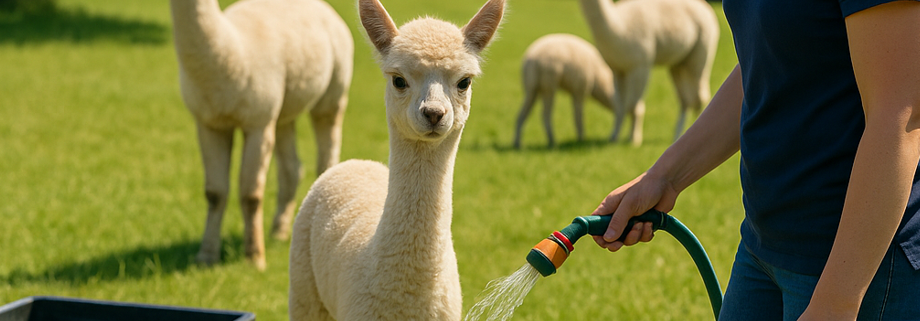
Let’s face it, Spring in the UK isn’t what it used to be. Gone are the reliable April showers and pleasantly crisp May breezes. Now, we’re seeing 26°C spikes in April, hosepipe bans by early May, and a lot of rather uncomfortable alpacas in very fluffy coats. As climate patterns shift and shearing schedules remain pinned to tradition, alpaca owners, particularly in the South face a growing heat management dilemma: how do you keep a fleece-covered camelid cool when the weather forgets it’s not July?
In this SEAG article, we’ll look at how alpacas cope, what overheating looks like, and, most importantly, what you can do about it. Because when the mercury rises, so does the risk. And an overheated alpaca is not just uncomfortable, it can be in real danger.
A Fleece Problem in a Changing Climate
Alpacas are built for the Andes. Their glorious fleece, warm, insulating, and excellent for warding off cold mountain winds, becomes a fluffy liability in a British heatwave. And while their cousins, the Vicugna, might be galloping across sun-drenched plains with a minimal coat, our alpacas are standing in our fields wearing the woolly equivalent of a duvet.
Alpacas regulate heat primarily through their legs and belly, areas with lighter fleece. But if the air’s hot, the ground’s dry, and they’re still carrying a full fleece, their ability to dump heat is compromised. That’s why the window, just before shearing begins, can be so risky. The sun’s blazing, but your shearer’s not due for a few weeks. Sound familiar?
The Signs of Heat Stress: What Trouble Looks Like
Alpacas don’t scream when they’re overheating. They just look… off. Knowing the early signs of heat stress could save you a call to the vet, or worse. Watch for:
- Lethargy: are they lagging behind the others? Not joining the sunbathing scrum?
Open-mouthed breathing: If an alpaca is panting with its mouth open, you’re officially in trouble. - Nostril flaring or rapid breathing: These are early signs the body’s trying to offload heat.
- Staggering or unsteady gait: This is urgent, get the animal cooled immediately.
- Drooping ears, dull expression, isolation: Alpacas are subtle, but if one looks miserable and isn’t moving, pay attention.
Left unchecked, heat stress can lead to organ damage or even death. Prevention is far easier than emergency intervention.
The Pre-Shear Predicament: Why April and May Are Danger Zones
Let’s talk timing. Shearing typically happens in May or June, but weather trends don’t always follow the calendar. When April roars in with 26°C days and no cloud cover, alpacas, still fully fleeced, can struggle to cope.
What can you do before the shearer arrives?
- Cria clips: Some owners opt for early belly and leg trims, especially for vulnerable animals.
- Flexible shearing dates: If you work with a local shearer, see if you can adjust your slot.
- Temporary cooling strategies, more on these below.
Remember, your alpacas don’t care what month it is, they care how hot it feels. Your job is to bridge that seasonal gap between fleece and freedom.
The Shade Game: Not All Fields Are Equal
Do your alpacas have somewhere to go when the sun turns savage? A bit of midday shade can make all the difference, especially for darker-fleeced animals, who absorb more heat.
Top shade options:
- Natural shade: Trees, hedgerows, the north side of a barn or shelter.
- Human-made shade: Portable shelters, open stables, shade cloth over pens.
- Rotational grazing: If one field bakes in full sun and another has good cover, consider swapping during heat spells.
Don’t assume they’ll “just cope.” Alpacas often sunbathe in groups, but they’re not daft. If it’s too hot, they’ll seek relief, if you’ve provided it.
Water, Especially Their Feet
Alpacas cool primarily through their underbellies and legs, so while hosing down the fleece might seem helpful, it’s not always effective, and can actually trap heat. Instead, focus on:
- Fresh, clean water buckets and troughs. Top them up twice daily in heat. Alpacas won’t drink warm, stagnant water.
- Footbaths or shallow paddling trays. They’ll stand in them if they feel the need.
- Hosing legs and bellies only. This is far more effective than wetting the back.
A word on enthusiasm: don’t chase your alpacas with a hose. That’s how trust gets eroded. Calm, quiet, gentle cooling is the goal.
Breeds and Bodies: Who’s at Greatest Risk?
Not all alpacas are created equal when it comes to heat resilience.
High-risk groups include:
- Dark-fleeced alpacas: Black or brown coats absorb more heat than white or light ones.
- Heavily pregnant females: They’re carrying an extra internal heater.
- Crias and elderly alpacas: Less efficient thermoregulation.
- Overweight alpacas: Fat acts as insulation, unfortunately.
Know your herd. Monitor high-risk individuals more closely, and consider early clipping or housing adjustments if a heatwave is forecast.
Electrolytes, Salt, and Snacks: Nutrition in the Heat
Alpacas may eat less during heat spells. That’s normal, but they still need proper hydration and electrolyte balance. Consider:
- Loose salt and mineral access.
- Electrolyte powder in water. Especially for high-risk animals.
- Cold treat tricks. Chilled chopped alpaca friendly veggies, occasionally.
- Avoid over-supplementing, too much isn’t helpful. Balance and observation are key.
Behavioural Quirks: What Alpacas Do to Help Themselves
Your alpacas aren’t passive in the face of heat. They have their own strategies, if you’re watching.
They’ll dig out cool spots in the soil. Don’t fill them in!
- They may stretch out flat to sunbathe. This is normal, unless they’re also panting.
- They cluster in shade, even tightly. Herd instinct overrides personal space.
Facilitate these behaviours, don’t block them. Their instincts are usually pretty smart.
Emergency Cooling: What to Do If an Alpaca Overheats
If you think one of your alpacas is suffering from heat stress, act fast:
Move them to shade.
- Hose legs and belly, not the fleece or face.
- Offer cool (not ice-cold) water.
- Call your vet. Especially if they’re unsteady or non-responsive.
Do not:
- Cover them in icy water.
- Force-feed water.
- Assume they’ll “sleep it off.”
Treat it like a serious medical issue, because it is.
Long-Term Planning: Adapting to a Hotter UK
This isn’t a one-off summer. The UK is warming. Alpaca husbandry has to evolve accordingly. Consider:
- Earlier shearing schedules.
- Permanent shade structures.
- Breed selection for lighter fleeces.
- Rotational grazing based on sun exposure.
- Emergency planning for heatwaves.
Just as we’ve adjusted for wetter winters, we need to prepare for hotter springs. Because if your alpaca is too hot in May, the problem started in January.
Stay Cool, Stay Kind
Your alpacas rely on you to read the weather, read their bodies, and take action. Heat stress is one of the most preventable problems in alpaca care, but only if you’re alert to the risks and willing to adapt.
So as the sun climbs higher and your shearing date looms, keep the water clean, the shade wide, and the fleece-drenched hugs to a minimum.
Thinking of getting alpacas? The British Alpaca Society offers free resources and a directory of accredited breeders. Also consider joining the South East Alpaca Group, a volunteer group affiliated with the BAS, who support alpaca and llama enthusiasts across the South East of England.