
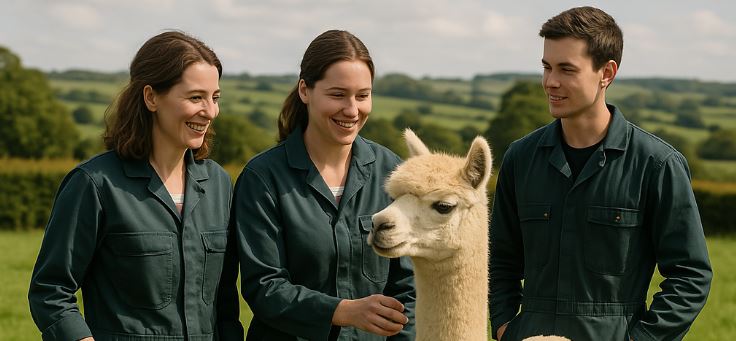
There’s something unforgettable about standing in the ring, the judge making their final walk down the line, and hearing your farm’s name called for a championship sash. Whether it’s a regional event or the gleaming spectacle of the BAS National Show, that moment carries the weight of planning, patience, and pedigree.
Winning in the UK alpaca show ring doesn’t happen by chance. It’s the product of year-round decisions, breeding, husbandry, training, and presentation, all culminating in a few critical minutes under a judge’s eye.
In this article, we’ll look at what it really takes to succeed, from selecting your show team to understanding what judges are looking for. I’ll cover halter shows, fleece competitions, the structure of the show calendar, and the strategies that experienced breeders use to rise through the ranks.
Whether you’re chasing your first rosette or aiming for a Supreme Champion at the National, let’s dig into what it means to win, and how to get there.
First it’s important to understand the show scene – the alpaca show calendar is structured to support breeders of all levels, from hobby farms to major stud herds. Success starts with knowing where to compete, and why.
Regional Halter Shows
These are local-level events held across the UK, often under the umbrella of regional groups like Eastern Alpaca Group, Heart of England, or South West Alpaca Group.
Why show here? These shows are great for young or unproven animals, early-season warm-ups, and benchmarking progress, with the judging style being friendly but competitive. Judges usually take time to explain placings. Use these shows to train young animals, test your show prep routine, and get feedback.
The BAS National Show
The big one. Held each spring, this is the flagship event of the British Alpaca Society and draws elite breeders from across the UK (and occasionally abroad).
The best of the best compete here. Winning means serious credibility. The judging style is formal, fast-paced, and highly competitive. Two judges typically work in tandem. Only take your top animals. Fleece and frame must be exceptional. Prepare for tough competition and tight classes.
Fleece Shows
Fleece competitions are judged independently of the animal. You submit skirted, prepared fleeces (often shorn the previous spring), which are scored on fineness, uniformity, brightness, crimp, handle, and presentation.
Why enter? Fleeces can win without perfect conformation. Ideal for older animals, breeding stock, or those unsuited to halter showing.
Key events: Yorkshire Fleece Show, South West Group Fleece Show, Heart of England Fleece Show, and the BAS National Fleece Show.
Focus on skirting, presentation, and sending fleeces at peak condition.
Second, choose your show team and understand what judges are looking for.
In halter shows, judges use a points-based system that scores:
- Fleece (50%): Fineness, density, crimp, brightness, uniformity
- Conformation (50%): Frame balance, bite, leg set, movement, overall presence
Judges are trained to reward:
- Well-balanced frames with strong top lines and straight legs
- Soft, uniform fleece across the blanket and into the extremities
- Brightness and crimp style consistent with age and breed
- Density that doesn’t sacrifice handle
“Fineness gets you noticed. Uniformity wins the class,” one judge told me. “But if they don’t walk well, they’re going to struggle.” So what makes a winner?
- Correct proportions (not long in the back, not over-angulated)
- Good temperament in the ring
- A fleece that opens cleanly and springs back
- A calm, steady gait during the walk
Common mistakes include:
- Entering animals with jaw or leg issues (instantly penalised)
- Poor fleece prep (dirty, matted, or blown fleeces)
- Underweight or overfed show animals
- Not training the alpaca to stand still and walk calmly
Third, training for the Ring starts at home. Start young. From 4–6 months, begin halter training and gentle handling. Then by show season, alpacas should:
- Walk calmly on a loose lead
- Stand square for judging without leaning or fidgeting
- Tolerate fleece handling without kicking or flinching
- Practice loading into the trailer, standing in pens, and walking in noisy environments.
In the ring, always yield to the judge and steward, and know your class number and be ready on time. Stand with poise; your body language reflects your professionalism.
Next, don’t overlook fleece shows, they’re often where long-term breeders prove the depth of their genetics. Winning Fleeces Share:
- Excellent skirted presentation
- Fineness and consistency through the whole sample
- Fineness and consistency through the whole sample
- Good length (not over or undergrown)
- Cleanliness, free from debris, dust, or second cuts
Our top tips include:
- Skirt your fleece immediately after shearing and store flat
- Keep in a breathable fleece bag (never plastic)
- Practice skirting in layers, removing coarser edges and legs
- Label and prepare with pride, presentation does affect score
It’s important to planning for the show year. Key calendar points are:
- January–February: Show team selection and training
- March–May: Regional halter shows and National Show
- June–August: Fleece show entries (fleeces from May shear)
- Autumn: Reflection, planning matings, reviewing feedback
Most breeders aim to have animals in peak show condition from 12–24 months. Plan births and shearing to hit this window.
When travelling, it can help to travel with other breeders to share costs and support. In general, arrive early to settle animals, and bring hay and water (this may be provided), signage, and show kit (halters, grooming, first aid).
Winning isn’t about showing off, it’s about showing up. Year after year. Pair after pair.
What you learn from a third-place ribbon at a regional show may help you breed a National Supreme three years later.
Study your judge’s comments. Compare fleeces at every chance. Build relationships with experienced breeders and learn from every ring pass.
“I don’t chase ribbons,” a breeder once told me. “I chase better. The ribbons are just confirmation I’m heading the right way.”
When you succeed in the ring, it echoes across your programme:
- You attract better stud clients
- Your cria command higher prices
- You gain credibility among breeders
- You validate your genetic decisions
But the real win is confidence, the knowledge that your alpacas hold their own in any company, under any judge.
And once you’ve won a Supreme at the National Show? Well. That sash doesn’t just decorate your farm gate, it opens doors.
The best breeders don’t win by cutting corners or chasing fads. They win by making sound breeding choices, caring meticulously for their animals, and presenting them with pride. So if you’re aiming for the show ring, do it properly.
- Train your animals well.
- Prepare their fleeces carefully.
- Show up early. Ask questions. Take notes.
And remember: the best alpacas don’t just look good, they feel right when the judge puts their hand in the fleece.
That’s how you win in the alpaca show ring.
Message from the South East Alpaca Group committee. We know that no two herds, or herd owners, are the same. We hope you found this article useful and if you’ve got ideas, suggestions, corrections, or just a different way of doing things, we’d love to hear from you. Our goal is to offer the most accurate, practical, and useful advice possible, and that works best when we all pitch in. Drop us a line at committee@southeastalpacagroup.org.uk and help us make our articles better.