
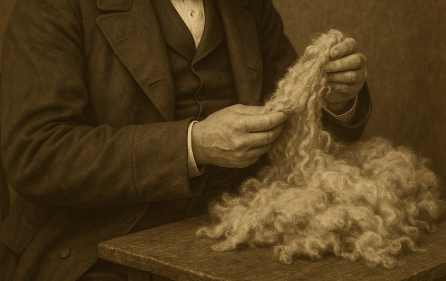

It began, as many charming stories do, with a British Royal Queen. Hidden away in the royal accounts of 1851 is a curious line: a bolt of cloth, spun from an unusual South American fleece, purchased for Queen Victoria. The source? A Peruvian camelid called the alpaca.
Alpaca wool was highly prized and imported with increasing quantity from Peru during the the 1840s and 50s, back then the alpaca was virtually unknown to the British public. Since the 1830’s it had started to capture the imagination of the textile trade, and, eventually, the nation’s smallholders.
Fast forward nearly two centuries, and alpacas are now a familiar, if still slightly surreal, sight in the British landscape. But the journey from Andean mountains to the hills of Herefordshire has been long, winding, and full of eccentric characters, both human and animal.
To understand the story, I travelled to Arequipa, Peru, a colonial city cradled by volcanoes and surrounded by some of the finest alpaca herds in the world. Here, the air is thin, the light sharp, and the animals regal. I stood on a plateau at 3,800 metres, fleece tugged by the wind, surrounded by hundreds of Huacayas and Suris grazing in the shadows of El Misti.
“Alpacas are sacred here,” explained Rosa Huamani, a fifth-generation alpaca herder. “They gave us warmth, trade, and dignity. They are more than animals, they are our history.”
And it was a history Britain nearly lost. In the mid-19th century, while Queen Victoria was admiring alpaca cloth at court, entrepreneurs like Titus Salt were transforming British fashion. Salt, a Yorkshire mill owner, famously stumbled upon the potential of alpaca fleece in a Liverpool warehouse and turned it into the fabric of Victorian high society, shimmering, durable, and light. He later presented a coat for Queen Victoria, that was made of alpaca wool to Prince Albert.
But while alpaca fibre was thriving, the animals themselves did not accompany their fleece. Early attempts to import live alpacas failed – climate, diet, and disease made them difficult to establish in Britain, even in zoos. And so, for nearly 150 years, alpacas remained a mystery animal, admired from afar, never quite at home.
In the early 1990’s, the Peruvian Government passed a law that allowed the export of alpacas and llamas. This paved the way for the alpacas to be successfully reintroduced to the UK, this time for good. A small group of dedicated breeders, some of them returning from travels to Peru and Chile, began importing foundation herds. Carefully. Cautiously. At great cost.
Many early breeders made pilgrimages to the Andes to study conformation, fleece quality, and genetic lines. They walked the puna grasslands with Quechua farmers, learned to distinguish crimp from bloom, and returned home with a vision of what the British alpaca could become.
Today, that vision is taking shape. Britain is now home to thousands of registered alpacas, and the best fleeces, tested in microns as fine as cashmere, rivaling those from Peru, Australia, and the United States.
But for all the progress, a big question looms: could alpacas ever be the foundation of a viable fibre industry in the UK?
The answer is complicated. Most British alpaca fleece ends up in small-scale craft projects, hand-spinning, or boutique clothing lines. A few farms export raw fleece, and a handful are experimenting with commercial spinning. But without scale and infrastructure, it remains a cottage industry.
“Alpaca fleece is a dream to wear but a nightmare to process,” said James Kendrick, a Yorkshire-based shearer and fibre grader. “Every fleece is different. Mills aren’t set up for it like they are for sheep’s wool. But if someone cracked the supply chain, standardised it, there’s huge potential.”
Some are trying. The British Alpaca Society offers fleece awards and educational resources to improve herd genetics. There are murmurs of co-operatives, regional fibre pools, and even a domestic brand to rival the likes of Merino.
But perhaps the most compelling future for alpacas lies not only in fleece but in their feel, their quiet, almost mystical ability to draw people outdoors, slow them down, and bring something soft into a hard world.

Back in Peru, Rosa told me something I keep turning over in my mind. “When you walk among alpacas, your breath slows. Your thoughts stop spinning. That is their gift.”
Maybe, just maybe, that’s what alpacas will always be for Britain, not a revolution, but a rebalancing. One that started with a queen, crossed an ocean, and is still unfolding in muddy fields and sunny hillsides across our countryside.
Thinking of getting alpacas? The British Alpaca Society offers free resources and a directory of accredited breeders. Also consider joining the South East Alpaca Group, a volunteer group affiliated with the BAS, who support alpaca and llama enthusiasts across the South East of England.