
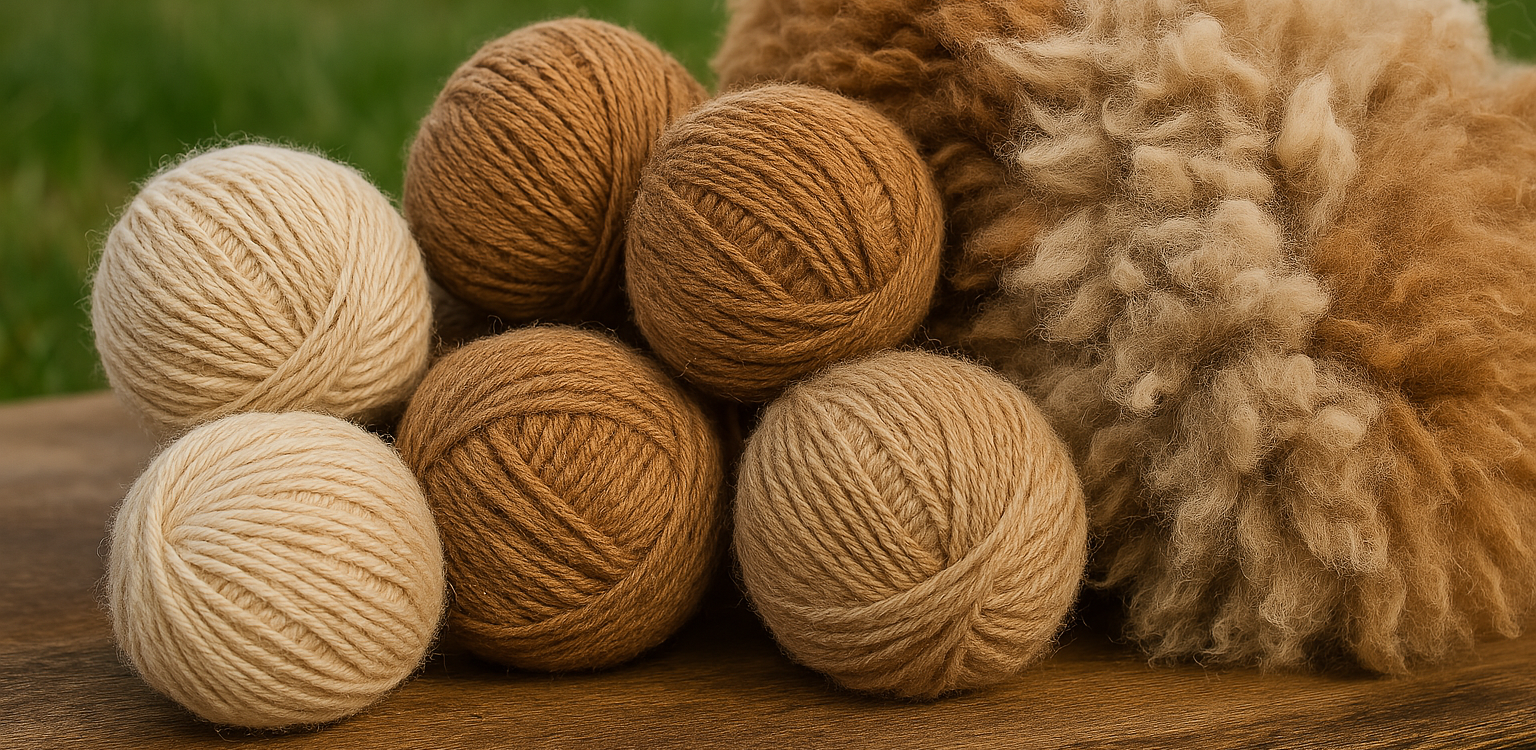

Alpaca fibre is considered one of the finest in the world, softer, warmer, and lighter than sheep wool, with unique qualities that make it highly sought after in the fashion and textile industries. But while alpacas have long been cherished for their fleece, the idea of cultivating it on a commercial scale in the UK is a much more recent venture.
To understand the significance of alpaca fleece in Britain, we must first look to the animal’s homeland: the Andes of Peru, Bolivia, and Chile. Alpacas have been bred for their fleece for thousands of years. In Incan times, they were regarded as royal animals, their fleece reserved for the elite.
Alpacas were first introduced to Britain in the 19th century, but it wasn’t until the late 1990s that the British farming community began to recognize the potential for alpaca farming as a business, especially for their luxurious fleece.
Alpaca fleece differs from wool in a number of ways. First and foremost, it lacks lanolin, the greasy substance found in sheep wool. This makes alpaca fleece hypoallergenic, which has contributed to its rise in popularity among those who suffer from wool-related allergies.
In terms of structure, alpaca fleece is made up of microscopic scales that give it its silky texture and insulating properties. This makes it incredibly warm, up to three times warmer than sheep wool, and lightweight. It is also naturally water-resistant, which adds to its versatility for outdoor clothing and accessories.
The process of turning alpaca fleece into a wearable product begins with shearing. This is usually done once a year, during the spring, when the alpacas naturally shed their winter coat. The fleece is then carefully sorted by quality: the best fleece, often from the neck and back, is set aside for high-end garments, while the coarser fleece from the legs and belly is used for less refined products like blankets or rugs.
I visited a small alpaca farm in Surrey, where owner and breeder Emma Taylor explained how she transformed her herd’s fleece into handspun yarn. “I was knitting for years, and when I first got alpacas, I realised the potential of their fleece,” Emma said. “It wasn’t just about farming, it was about creativity, and sharing something that was uniquely ours.”
Emma runs a micro-farm and produces a small range of handmade alpaca garments, from cosy scarves to luxurious cardigans. “The process is slow, but that’s what I love about it. From shearing to spinning to knitting, it’s about taking time to respect the fleece and the animal.”
Despite the small-scale production, Emma’s work is in high demand. “There’s a real market for sustainable, ethical fashion now,” she said. “People are willing to pay for quality, and alpaca fibre offers something special. It’s luxurious, eco-friendly, and unique.”
But for all its appeal, producing alpaca fibre in the UK remains challenging. The climate is not ideal for large-scale commercial production, and the number of alpacas in the country is still relatively small compared to more traditional sources of fibre like sheep. Additionally, the processing of alpaca fleece requires specialized equipment that can be expensive for small farms to obtain.
Despite these challenges, there is optimism about the future of alpaca fibre in the UK. The market for sustainable, locally-produced textiles is growing. British alpaca breeders are working to improve fleece quality through selective breeding, and more farmers are exploring ways to process and spin their alpaca fleece locally, rather than sending it abroad for processing.
One example of this is the Alpaca Fibre Co-operative, a collective of UK breeders who are working together to establish a more robust domestic alpaca fibre industry. By pooling resources, they can share processing equipment, reduce costs, and increase the volume of UK-produced alpaca products on the market.
“Alpaca fibre has huge potential,” says Claire Brown, an alpaca breeder in East Sussex. “The demand for sustainable, eco-friendly materials is on the rise, and British alpacas can play a big role in meeting that demand. But it requires collaboration between breeders, processors, and designers to make it happen.”
For now, British alpaca products remain relatively niche, but the market is growing. High-end designers are beginning to incorporate alpaca fibre into their collections, and alpaca products can now be found in boutique shops across the country. It’s clear that the unique properties of alpaca fleece, its warmth, softness, and hypoallergenic qualities, have earned it a place in the modern sustainable fashion movement.
Alpaca fibre is more than just a luxury. It’s a symbol of the slow fashion movement, of sustainability, of connection to the land and animals that provide for us. As the demand for ethical, locally-produced textiles grows, so too does the potential for the British alpaca industry.
In recent years, the UK alpaca fleece market has experienced a period of growth, with prices reflecting the increasing demand for this luxurious fibre. According to one buyer and processor of British alpaca fleeces, the price for white skirted cria alpaca fleece is around £15 per kilogram, while unskirted fleece is usually brought for around £10 per kilogram. For other coloured fleeces, prices paid are less, with unskirted fleece usually brought for around £5-£6 per kilogram.
These figures stand in stark contrast to the broader wool market. The British Wool Price Indicator reported that as of October 2024, the average price for British fleece wool was just 98p per kilogram.
So could there ever be a viable alpaca fleece market? The answer is a resounding yes, but it will take time. According to market insights firm Future Market Insights, the UK alpaca fibre market is set to experience sustained growth over the next decade, with projections estimating a compound annual growth rate of 6.8% from 2025 to 2035. For those unfamiliar with the term, CAGR is a metric used by financial analysts to describe the average yearly growth of an investment, or in this case, a market, over a set period of time, accounting for the effect of compounding.
Essentially if FMI’s predication is correct, that the alpaca fibre sector will grow steadily and significantly year-on-year, then the UK alpaca fleece market could be worth approximately £590 million by 2035.
So from the fields of East Sussex, to the weaving looms of Britain’s fashion houses, the craft of alpaca fibre is slowly weaving its way into the fabric of our lives. And as more breeders invest in sustainable practices and look for innovative ways to process and market their fleece, the future of British alpaca fibre looks promising indeed.

Thinking of getting alpacas? The British Alpaca Society offers free resources and a directory of accredited breeders. Also consider joining the South East Alpaca Group, a volunteer group affiliated with the BAS, who support alpaca and llama enthusiasts across the South East of England.