
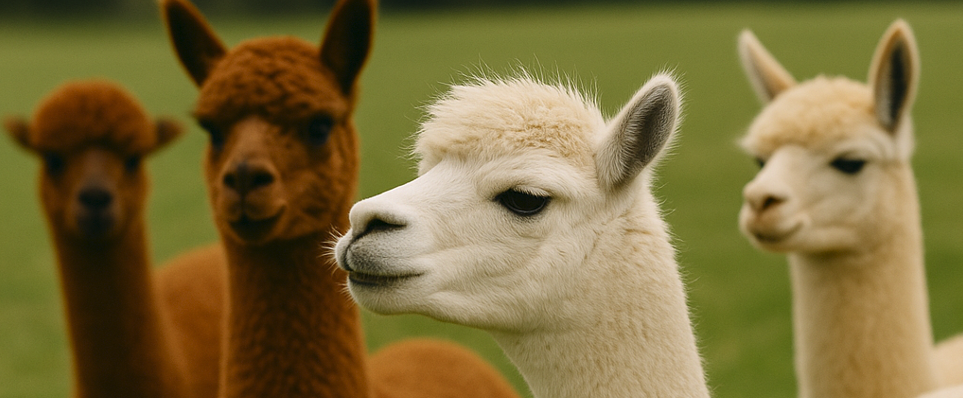

Let’s get one thing straight: alpacas are not the serene, gentle, drama-free pastoral creatures that Instagram would have you believe. They are adorable, yes. Gentle, sometimes. But beneath that fuzzy exterior lies a complex social web that would give Love Island a run for its money.
Alpacas jockey for power like they were campaigning for Westminster. There are coups. There are grudges. There are moments of unprovoked sass so pointed they could draw blood (and occasionally do).
So, buckle up as we explore the wild world of alpaca social dynamics, the who, the how, and the you’ve got to be joking of herd hierarchy. We’ll look at how one gets to the top, how you might tumble back down, and what happens when you throw a newcomer into the mix.
Hierarchy is Real, and Ruthlessly Enforced
Alpacas operate on a clear pecking order. Every herd has its queen bee (or bossy boots, usually a dominant female, who makes decisions about space, food, and the general vibe of the group.
Think of her as the Head Girl of an exclusive boarding school. She’s not necessarily the biggest, oldest, or strongest, but she exudes a certain… menace. A subtle look. A twitch of the tail. A low hum that sounds polite but could melt steel.
Signs she’s in charge:
- Eats first at the feed bucket
- Chooses the prime dust bath spot
- Asserts herself at dung piles (yes, seriously)
- Gets the best shady spot under the shelter
The rest of the herd? They follow suit. Alpacas are surprisingly compliant when it comes to social norms, until they’re not.
Status is Built on Posture, Grit, and Strategic Spitting
So how does one become Supreme? Posture is a major indicator. The boss alpaca holds herself tall, neck stretched, ears forward. She wants to be seen. Subordinates tend to lower their heads slightly, glance away, and generally say, “Yes, madam, very good madam” with their entire body.
But make no mistake, dominance is enforced. A shoulder bump here. A well-timed spit there. Alpacas use a variety of signals to push each other down (socially, not physically, usually). And yes, I’ve seen full-blown “neck-fencing” matches between females that could rival any teenage sibling squabble.
The end result? A pecking order that is often:
- Subtle
- Brutal
- Hilariously specific to the group
Some animals will push others off hay piles, others simply hum passive-aggressively until they get their way. It’s an art form.
Intact Males Can Be Another Ballgame
Intact males live by a slightly different code. Put two adult entire males together and you’d better have popcorn, and a perhaps an exit strategy!
Male hierarchies are more testosterone-fuelled, with neck-wrestling and posturing that can escalate into fights. Serious fights. The kind that end in vet bills and regret.
Top male behaviours include:
- Orgling at inappropriate times
- Standing over others in a not-so-subtle power move
- Attempting to mount anything that doesn’t run away fast enough
Yes, Alpacas Can Move Up (or Down) the Ladder
Unlike some livestock species with fixed social roles, alpaca hierarchy is fluid. An alpaca can rise in the ranks through confidence, age, or opportunism.
Here are a few typical “moves”:
- The Rising Star: A confident young female starts throwing her weight around once she matures. Watch her closely, she’s making power plays.
- The Coup d’Alpaca: An ageing dominant matriarch starts slowing down, and her underling senses weakness. Before you know it, the feed line has a new leader.
- The Fall from Grace: An alpaca recovering from illness or injury often drops in status. The herd senses vulnerability like tea-drinkers sense a biscuit break.
It’s not always dramatic. Sometimes the changes happen over weeks. Sometimes it’s a single spat over a particularly juicy patch of hay, and boom, the whole ladder shifts.
Herd Dynamics Can Be Species-Specific (But Not Always)
Alpacas don’t follow every rule we know from other livestock. They’re not sheep, despite their fleece. They’re not goats, despite their occasional cheekiness. And they’re certainly not horses, despite the similar digestive warnings.
Where alpacas really shine is their nuanced social relationships. I’ve seen pairs of best friends who groom each other, sleep beside one another every night, and even grieve visibly when separated.
Look out for:
- Jealousy when a new cria gets more attention
- Cold shoulders when a favourite food is stolen
- Full-blown sulks when the dust bath is wet
These aren’t flukes, they’re signs of a social species that not only observes one another but actively calculates. It’s all terribly British.
Introducing a New Alpaca? Welcome to the Drama
Ah yes, the Newcomer. There’s nothing quite like introducing a fresh face to an established herd. It’s like transferring into Year 9 at a secondary school where everyone’s already picked their lunch table.
The stages go something like this:
- Suspicion: The herd approaches with intense humming and sniffing. The newcomer looks bewildered.
- Posturing: Dominant members circle. A few spit. The new alpaca tries to make herself small.
- Awkward rejection: For a few days, she’s the weird cousin no one invites to dinner.
- Gradual acceptance: She learns the toilet spots. Starts eating at the right time. Bumps noses with someone mid-tier.
- Full assimilation: She knows who to avoid, who’s chill, and how to make her way to the water trough without conflict.
Important note: Always quarantine new arrivals for biosecurity before introducing them to the herd. After that, introductions should be slow and supervised.
Cria Are Wildcards, Until Mum Steps In
Cria are born without a social role. Their place in the herd depends heavily on mum’s status. High-ranking females tend to have crias who inherit their social currency. A dominant dam’s cria might get away with antics that would have a low-status cria spat at for even considering.
But here’s where it gets interesting:
- Singleton crias often struggle socially, especially if there are no peers to learn from.
- Orphan crias need even more careful integration. They’re often ignored or bullied unless protected by a gentle auntie.
- Bold crias can rise through charm alone, but it’s risky.
Stress Changes the Hierarchy
Alpacas are stress-sensitive creatures, and major stressors, illness, transport, shearing, even extreme weather—can lead to temporary reshuffles in social dynamics.
You may notice:
- A previously dominant animal hanging back from food
- A timid alpaca suddenly throwing her weight around
- Cliques shifting as animals look for reassurance or solidarity
If you’re managing a sick or stressed animal, watch their social standing. Loss of status can impact appetite, movement, and behaviour, making recovery harder.
The Danger of Over-Humanised Alpacas
Every so often, I meet an alpaca who’s spent a little too much time with humans. Bottle-fed crias, over-handled youngsters, or animals kept alone for long periods can become human-imprinted.
These animals:
- Struggle to read social cues from other alpacas
- Don’t know when to back off during disputes
- Can’t figure out their place in the hierarchy, and often get into trouble
They’re the alpaca equivalent of someone who skipped Year 7 and now doesn’t know the rules of the common room.
The fix? Time, patience, and supervised reintroduction to a calm, well-socialised herd. They often find their way eventually, but it’s rarely easy.
Understanding Social Dynamics = Better Welfare
Why does any of this matter? Because alpacas are emotional, social, and hierarchical animals. Failing to recognise these dynamics leads to:
- Isolated or bullied animals
- Stress-induced weight loss
- Misinterpreted behaviour problems
- Reduced reproductive success
- General unhappiness (theirs and yours)
When you understand the social ladder, you can:
- Spot early signs of bullying or exclusion
- Plan introductions better
- Choose herd groups based on temperament
- Provide support during transitions (new births, deaths, relocations)
And most importantly, you can stop blaming “that one grumpy one” and start asking why she’s grumpy. (Though, let’s be honest, some of them are just grumpy.)
Final Thoughts: Herd Politics Are Real, and Delightful
I’ll leave you with this: alpaca herds are not just flocks of animals. They’re functioning societies. With leaders, outcasts, upstarts, peacekeepers, and the occasional diva.
They navigate their world not just through instinct, but through learning, communication, and negotiation. If you take the time to watch, really watch, you’ll see betrayals, friendships, leadership changes, and redemption arcs worthy of a TV series.
And once you’ve seen an alpaca confidently march up to a dung pile, deliberately spit on her rival’s contribution, and hum smugly back to her place in the sun, you’ll never see your herd the same way again.
If you’re just starting out, and thinking of getting alpacas? The British Alpaca Society offers free resources and a directory of accredited breeders. Also consider joining the South East Alpaca Group, a volunteer group affiliated with the BAS, who support alpaca and llama enthusiasts across the South East of England.