
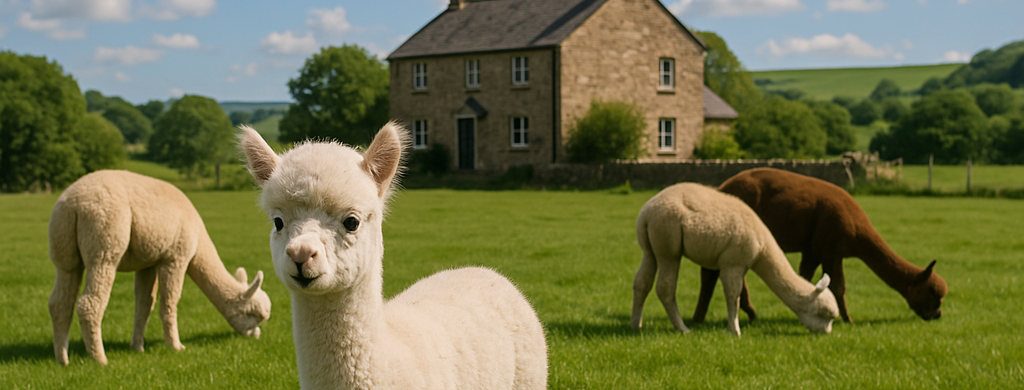

It begins, as so many rural daydreams do, with a field. Rolling, green, possibly mist-kissed. Add a rustic shelter, a few wooden fences, and a small herd of alpacas, grazing like living lawn ornaments. It looks idyllic, and for some, it truly is. But as any seasoned alpaca farmer will tell you, what glitters in the paddock is not always gold.
Behind the fleecy faces and humming charm lies a complex, and surprisingly high-stakes business model. So I set out to trace the economics of Britain’s growing alpaca industry, from upfront investments to fleece markets, from stud services to the humble (but mighty) trekking trek.
First, let’s talk numbers. A typical breeding-quality female alpaca can cost anywhere between £3,000 and £10,000, depending on lineage, conformation, and fleece quality. A proven stud? £5,000 to £15,000 or more.
Then come the costs:
Fencing: Alpacas are surprisingly agile. Perimeter security can run £5,000–£15,000 for several acres, however if you are prepared to do the fencing yourself these costs will be significantly less, 100 meters of high tensile fencing suitable for alpacas typically costs between £200-£250.
Shelters and barns: Not palaces, but dry, draft-free, and safe. Budget £3,500–£7,500 for a shelter capable of housing 4-8 alpacas.
Feed: Hay, minerals, camelid-specific food supplements. Allow £200–£300 per alpaca per year.
Vet care: Worming, vaccinations, dental checks, and occasional surprises.
Insurance: Public liability, consider mortality cover if your alpacas are particularly valuable, and business protection.
Breeding: If you’re not keeping your own males, stud fees average £500–£2,500.
As Claire Brown of Weald View Alpacas puts it, “You don’t go into alpacas to make a fast buck.”
Alpaca income streams are more varied than many realise. Here’s a breakdown:
- Breeding and Sales
For those with show-quality stock, breeding remains the highest-value avenue. A good female can bring in thousands, but it’s a long game. And reputation matters more than anything.
Annual potential: £5,000–£50,000+ (for established breeders) - Fleece Sales
Alpaca fleece is light, warm, hypoallergenic, and doesn’t contain lanolin. But raw fleece sells for only around £10–£20/kg unless it’s been processed. Turning it into yarn, garments, or felt boosts value, but requires time, skill, and branding. For many breeders, fleece sales are unlikely to surpass their shearing costs.
Annual potential: £100–£2,000 (depending on processing) - Trekking and Experiences
As explored in my previous feature, alpaca trekking is booming. With careful training and a scenic route, a herd of six to eight animals can provide steady weekend income, often more reliable than breeding.
Annual potential: £10,000–£50,000 (depending on bookings) - Stud Services
If you own a top-quality male, you can offer mobile or on-farm mating services. This requires experience, excellent biosecurity, and solid credentials.
Annual potential: £2,000–£10,000 - Therapy and Education
Alpacas in care homes, schools, and therapeutic settings are increasingly sought after. Those who partner with therapists or teachers can create impactful (and fundable) programmes.
Annual potential: £1,000–£8,000
Pitfalls and Paddocks
Of course, not every field blooms. Common challenges include:
- Overbreeding: Flooding the market with low-quality animals devalues the entire industry, and is strongly discouraged, particularly as it is often associated with unacceptable animal welfare.
- Inexperience: Many first-time owners underestimate care, time, or animal behaviour.
- Poor fleece quality: Without attention to genetics and nutrition, fleeces won’t sell.
- Regulation: As therapy and trekking expand, councils may require more oversight and licences.
- Weather: Wet British winters wreak havoc on paddocks. Drainage and dry areas are everything.
Paul and Yvette, who run trekking near the Peak District, said their biggest surprise was the “emotional commitment.” “You’re not just raising livestock,” Yvette said. “You’re managing personalities. You care when they’re unwell. You rearrange Christmas plans for a difficult birth. It’s a lifestyle.”
Despite the costs, Britain’s alpaca industry is quietly maturing. The British Alpaca Society has over 1,500 members. New breeders are entering with more care, more collaboration. Niche markets for fleece, from hand-spinners to heritage weavers, are slowly growing.
Claire Brown told me. “It will make you pay attention to the weather, to your animals, to the land. And for the right person, that’s worth a lot”
Thinking of Starting an Alpaca Business? Ask Yourself:
- Do I have time for daily care and year-round attention?
- Do I understand the genetics and goals of breeding?
- Do I want to focus on fleece, trekking, therapy, or a blend?
- Can I afford to wait 2–3 years for returns?
- Do I know who my customers are — and how I’ll reach them?

Life with alpacas isn’t all sunshine and skipping crias. In winter, fields can churn to sludge, water troughs freeze, and feeding becomes a daily grind. “They don’t like wet feet,” Claire Brown warned, laughing as we both wrestled with a reluctant male needing a toenail trim. “And neither do I.”
But in summer, it’s another world: alpacas humming softly in the grass, children feeding them from buckets, and fleece so light and clean it practically spins itself.
Before you rush to buy your own herd, consider this:
- Land: You’ll need at least 1–2 acres for a few alpacas, with shelter and secure fencing.
- Companionship: Alpacas must be kept in groups (minimum of three).
- Costs: Budget for quality feed, vet care, shearing (once a year), and shelter.
- Breeding: Know your bloodlines if you plan to breed, poor choices can lead to health issues.
- Handling: They’re not pets. Alpacas don’t like to be cuddled, and trust is built over time.
- Business Planning: If you’re aiming for income, fleece, trekking, or breeding – plan carefully, and speak to experienced owners.
- Shearing and Vets: Book early. Shearers get busy in late spring, and alpacas require specialist veterinary knowledge.
Alpacas won’t solve your problems. They won’t mow your lawn, either – they nibble gently, rather than graze. But they will change you. They’ll teach you patience, presence, and the quiet joy of watching a baby cria take its first wobbly steps at sunrise.
Thinking of getting alpacas? The British Alpaca Society offers free resources and a directory of accredited breeders. Also consider joining the South East Alpaca Group, a volunteer group affiliated with the BAS, who support alpaca and llama enthusiasts across the South East of England.