
You’re walking your fence line one morning, mug of tea in hand, boots still damp from dew, when you spot something odd near the boundary hedge. A patch of disturbed soil. Claw marks. A tunnel entrance wider than your handspan, framed with loose spoil and flattened grass trails leading to and from the hedgerow. You crouch, peer in, and suddenly feel the stomach-drop of recognition.
It’s a badger sett. And it’s right next to your alpaca field.
The questions start pouring in. Could they attack the alpacas? Will they spread disease? What about TB? What can I do about it? What am I allowed to do about it?
This article is for every UK alpaca owner, especially in the South East, who’s found themselves in this exact situation. We’ll break down the risks, the myths, the law, and the practical steps you can take to protect your herd without panic, prejudice, or prosecution.
Understanding Badgers in Britain
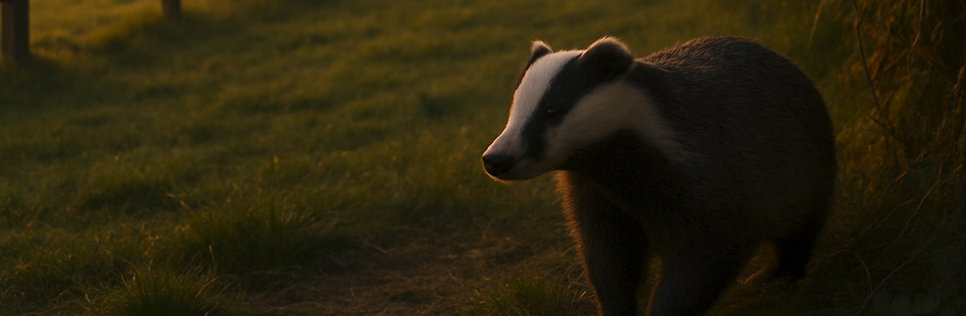
Badgers are the largest land predators native to the UK, and also among the most protected. The European badger (Meles meles) is a robust, nocturnal animal that lives in complex, communal tunnel systems known as setts. They’re omnivores, with a preference for earthworms, grubs, beetles, and fruit, but they’ll scavenge if food is scarce.
A typical badger clan will include a dominant boar and sow, several subordinate adults, and the current year’s cubs. Their territories are well-established, marked with scent and defended through ritual and, occasionally, conflict. Setts may have many entrances and be used for generations.
They don’t generally move in overnight. If you’ve just discovered one, chances are it’s been there a while, especially if it’s an active, well-developed sett. In the South East, where land pressure is high and woodland patches are fragmented, it’s not uncommon to find badgers using old hedgerows or sloped field corners.
Identifying a badger sett correctly matters, especially if you’re considering what to do next. Look for:
- A D-shaped entrance, usually 25–35cm wide
- Spoil heaps of loose soil, often with bedding materials like grass or straw
- Smooth trails or “runs” leading away
- Multiple entrances, sometimes over a wide area
Don’t confuse these with rabbit burrows (smaller, rounder) or fox earths (narrower and often littered with feathers or bones).
Do Badgers Attack Alpacas?
Let’s deal with this one directly: the odds of a badger physically attacking a healthy adult alpaca are vanishingly small.
Badgers are reclusive. They avoid confrontation and are more likely to freeze or flee than fight. They are capable of defending themselves fiercely if cornered, but they do not seek out larger animals to harass.
There are rare cases where badgers have been found to nip at livestock if they’re startled in close proximity, usually in confined barns or shared housing situations. With alpacas, however, your main concerns won’t be fangs or claws.
Where it gets more complicated is the disease risk.
The Real Risk: Bovine Tuberculosis (bTB)
This is where the conversation takes a serious turn. Because although the average badger won’t lay a claw on your alpacas, it may still represent a significant biological threat, especially if you live in or near a TB hotspot.
Bovine tuberculosis, caused by Mycobacterium bovis, is a chronic bacterial infection affecting cattle and other mammals. In the UK, badgers are a recognised wildlife reservoir of this disease.
Badgers can transmit TB via:
- Urine, faeces, and saliva left on pasture
- Contamination of feed and water troughs
- Aerosol transmission in shared spaces or close contact
Infected alpacas may show few early signs. When symptoms do appear, they can include weight loss, lethargy, and swollen lymph nodes. Unfortunately, many alpaca TB cases are only confirmed post-mortem.
Why Alpacas Are Especially Vulnerable
Cattle in England are subject to regular TB testing and movement restrictions, but camelids are not covered by the same government protocols. There’s no national screening scheme, no mandatory testing unless an outbreak is suspected, and no compensation if your herd is culled.
The British Alpaca Society (BAS) offers a voluntary TB testing programme, and some breeders engage private vets for annual surveillance, but testing is costly, stressful for animals, and has limitations in accuracy.
In short: if TB enters your herd, you may not know until it’s too late.
While the South East has not historically been a TB hotspot, the disease has been spreading eastward for years. Hampshire, Berkshire, and parts of Sussex and Kent have seen increased incidence. The combination of cattle movements, wildlife spread, and habitat fragmentation has created complex transmission networks.
If a badger sett appears in your field or next to your fenceline, and you’re in one of these zones, your concern is justified.
How Worried Should You Be, Really?
This is the big question, and the answer depends on several factors:
- Proximity of the sett to feeding, watering, and loafing areas
- Whether the sett is active
- Regional TB risk level
- Presence of other known reservoirs (deer, cattle, other camelids)
- How exposed your pasture is to wildlife ingress
If your field borders woodland, isn’t badger-fenced, and you find signs of latrines or foraging near feed stations, your exposure risk increases.
But panic isn’t the answer. Vigilance is. Many alpaca owners live alongside badgers for years without issue. The key is managing risk, sensibly, legally, and with your herd’s safety as your first priority.
What You Can Do: Practical Biosecurity
- Fence Them Out (Maybe). Badgers are strong, determined diggers. They can push through stock netting, tunnel under field fencing, and clamber over lower barriers.
- Badger-proof fencing: Ideally, this is stock fencing sunk 50–60cm into the ground, with a horizontal skirt of mesh to prevent digging, or paired with a low electric wire.
- Gates and stiles should have no ground clearance, or be skirted.
- Full badger exclusion is expensive and often not practical on large acreage. Focus your efforts on high-risk zones: around shelters and barns, feeding stations, or water troughs.
Protect Feed and Water
- Elevate feed bins and hay feeders to badger-inaccessible heights
- Use raised drinking bowl style, rather than floor mounted troughs for water
- Remove uneaten feed promptly to avoid attracting night-time visitors
- Keep feed stores badger-proofed (metal bins, secure doors)
Surveillance and Monitoring
- Consider, setting up trail cameras to confirm badger presence and activity patterns
- Check for latrines, usually shallow pits filled with poo, as these often mark territory boundaries
Cleanliness and Quarantine
- Boot dips at gateways, with regular changing of disinfectant
- Isolate new arrivals and test before mixing them with the herd
- Log all animal movements and maintain health records
- Clean feeders and troughs daily
The Law on Badgers and Setts
Badgers are protected under the Protection of Badgers Act 1992. This means:
- You cannot disturb a sett without a license
- You cannot block entrances, dig near them, or use machinery within 20 meters without risk of breaching the law
- You cannot harm, trap, or relocate badgers
If you suspect an active sett is compromising your biosecurity, you must contact Natural England or your local wildlife officer. In some cases, a license may be granted for sett closure or disturbance, but this is rare, and usually only where risk is proven, alternatives are exhausted, and expert ecological surveys support the application.
Ignorance is not a defense. Even accidental interference with a sett can land you in legal hot water.
Living With Wildlife: Final Thoughts
For those of us raising alpacas, coexisting with wildlife isn’t optional, it’s part of the landscape. And while badgers can carry serious risks, they are not villains. They’re native, protected animals navigating a countryside carved up by roads, fences, and human ambition.
What we can do is stay vigilant, invest in practical biosecurity, and work with vets and regulatory bodies to reduce disease risks.
So, just how worried should you be?
We’d suggest, worried enough to take it seriously. Not so worried you lie awake every night.
And if in doubt, remember the old saying: “Strong fences make good neighbours”… just as long as the neighbours can’t dig under them!
Message from the South East Alpaca Group committee. We know that no two herds, or herd owners, are the same. We hope you found this article useful and if you’ve got ideas, suggestions, corrections, or just a different way of doing things, we’d love to hear from you. Our goal is to offer the most accurate, practical, and useful advice possible, and that works best when we all pitch in. Drop us a line at committee@southeastalpacagroup.org.uk and help us make our articles better.