
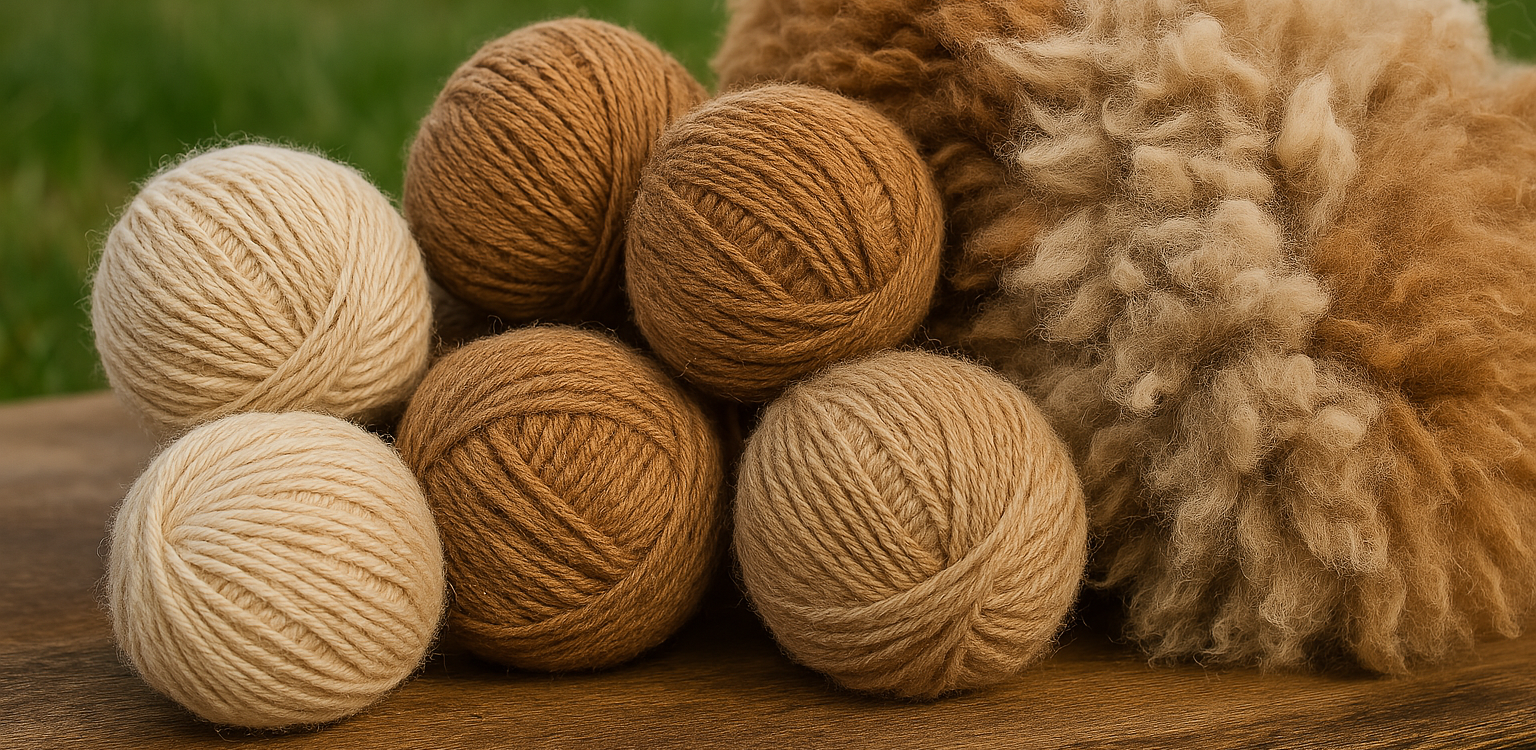

You’ve had your alpacas sheared. You’ve stared at the soft, cloud-like piles on the ground and thought, “That looks too good to throw away.” And yet, many of us have done just that. Or we’ve dutifully bagged it, labelled it with the alpaca’s name, and then… well, stuck it in storage for the next three years.
But let’s be honest: if you’ve gone to the effort of breeding these beautiful animals, managing them year-round, and paying for a professional shearer, it seems a waste not to let the fibre earn its keep.
Whether you’re a new breeder staring at your first fleece haul with mild panic or a long-time owner who’s been quietly accumulating bin bags of fibre in the loft, here are ten things you really ought to know if you want to turn that glorious fibre into something useful, beautiful, or even profitable.
1) You Don’t Need to Be a Spinner, Weaver, or Wizard
Let’s get this out of the way: you do not need to do anything magical with the fleece yourself. There’s no need to learn to spin on a drop spindle by candlelight while reciting the life story of each alpaca. You don’t need to be a felter, knitter, or textile artist (though if you are, lucky you).
You can send your fleeces to a mini-mill or fibre processor, and they’ll do all the clever stuff, turning raw fleece into batts, rovings, yarn, felt sheets, or even finished products like scarves and throws.
Your job is simply to decide what you’d like out of it and prepare the fleece well. Which brings us to…
2) Skirting Matters More Than You Think
Yes, it’s dull. Yes, it’s messy. And yes, it takes longer than you hoped. But skirting your fleece (that is, removing the coarse, grubby, vegetable matter-laden edges from the good blanket) is the difference between getting a beautiful product back from the mill… or a phone call from a disgruntled processor asking what on earth you sent them.
Processors are not miracle workers. They can’t turn straw and second cuts into laceweight yarn. So take the time, even if it means a few evenings with a podcast and a skirting table in the garage. Get rid of coarse guard hair, poop tags, hay, and anything that isn’t soft, uniform fleece from the blanket.
And if you’re not sure what to keep and what to toss, ask around, there are some great videos online, or pop along to a fleece workshop at your local group.
3) The Blanket is Your Gold. The Rest is Probably Compost
Not all fleece is created equal. The blanket, the saddle and sides, is the prime fibre. That’s the bit you want to keep, process, and treasure. The neck fleece is usually coarser and full of debris. The legs and belly? You don’t want to know.
Save yourself the time and the processing fees: bag up the good stuff, compost the rest, and move on.
And please, don’t mix it all together thinking it’ll sort itself out. It won’t.
4) There Are Processors Across the Country, And They Don’t Bite
The UK has several small-scale fibre mills who specialise in alpaca. They understand that each fleece is different. Some mills are happy to work with just a few fleeces; others prefer large batches. Some will blend your fibre with wool or silk; others keep it 100% pure.
Don’t be afraid to pick up the phone (or write a nice email). Tell them you’re new. Ask what they need, how they like fleece presented, and what they can offer. Most are lovely, and they’ll guide you through the process.
Top tip: get in early. The good mills are in demand, and some book out for the whole season by the end of June.
5) You’ll Need to Decide What You Want Back
Before you send your fleeces off, think about the end product. Are you hoping for yarn to sell at shows? Felting batts for craft fairs? A giant bag of rovings for your friend who spins? Maybe you’re after a custom scarf made from your favourite female’s first shearing.
Different mills offer different services, so your intended outcome affects where you send your fleece, and how it should be prepared.
Be honest with yourself. Don’t ask for laceweight yarn from a 10-year-old male’s third shearing. It’s okay to say, “This is for felting only.”
6) Not Every Fleece is Worth Processing, And That’s OK
Some fleeces are soft, crimpy, bright, and begging to be spun. Others are coarse, inconsistent, or full of debris. Learn to spot the difference.
Don’t feel bad about chucking sub-par fleece on the compost heap or using it to line chicken nests. Your alpacas will produce fleece every year, you’re not wasting it; you’re being practical.
You’ll quickly get a feel for what’s worth keeping. The mills will tell you, too, if you ask for feedback.
7) Fibre Analysis Is Your Friend
If you’re serious about improving your herd’s fleece quality, and getting more value out of the fibre, it’s worth investing in annual fibre testing. You’ll get micron counts, SDs, curvature, and all sorts of other numbers that sound complicated but are actually really useful.
In short: lower microns = softer fleece. A tight SD (standard deviation) means consistency. High curvature is great for bounce and yarn memory. And that all translates into better products and, yes, better prices.
Plus, if you ever sell fleeces or stud services, having those stats makes you look professional (because you are).
8) Don’t Be Shy About Selling Your Fibre
People love alpaca fleece. Spinners, knitters, felters, and crafters are always on the lookout for nice, clean, well-presented alpaca fibre, especially in natural colours. Even raw fleece can sell well if it’s skirted and labelled properly.
You can sell it online (Etsy, Facebook groups, eBay), at local craft fairs, or via alpaca community websites. Some processors will even help you sell the finished yarn or products through their own outlets.
Just be honest in your descriptions, micron (if you know it), colour, weight, and what prep it’s had.
9) It’s a Great Way to Connect With Your Animals
Processing fleece helps you see your alpacas in a new light. You start paying attention to more than just halter training and birthing, you begin to really appreciate fleece traits, cleanliness, uniformity, and handling.
You’ll find yourself noticing who rolls the most in the dirtiest part of the field, who has a fleece like buttercream, and who has suspicious guard hairs appearing where they shouldn’t.
It’s another layer of connection, and frankly, another way to justify keeping so many of them.
10) Fleece Doesn’t Have to Be About Profit, But It Can Be
Let’s be realistic. Processing fleece is not a get-rich-quick scheme. But it can help cover costs. A batch of yarn from your best girls might earn enough to pay for next year’s shearing. Felted soap made from your fleeces might become your best-seller at Christmas fairs. A local hand-spinner might buy all your skirted blankets every year.
More importantly, using your fleece closes the loop. You’re making the most of what your alpacas produce. You’re creating a story to tell your visitors. You’re giving yourself another reason to keep doing this mad, muddy, utterly brilliant thing called alpaca farming.
Final Thoughts: Don’t Be Intimidated, Just Start
You don’t have to do everything at once. Pick your best three fleeces this year and send them off. Ask your local group for mill recommendations. Watch a few YouTube skirting videos. Try something small, and see how it feels.
If it goes wrong, well, you’ve got next year’s fleece coming soon. And if it goes right? You’ll have your own yarn, from your own animals, and you’ll never look at a bin bag of fibre the same way again.
So go on, get those fleeces out of the garage. You’ve got something good there. Let’s do something with it.